Sunday, December 31, 2006

Just for Today - DECMBER 31, 2006

On this Holy Family weekend that ushers in the new year I have some suggestions for resolutions. They come under the title of, “Just for today”.

Just for today I will strengthen my mind and will learn something useful.
I will not be mental loafer. I will read something that requires effort, thought and concentration.
Just for today I will be unafraid. Especially I will be unafraid to be happy to enjoy what is beautiful, to love and believe that those I love really love me.
Just for today I will have a quiet half hour all by myself; and in the half hour I will give thanks to Almighty God for the abundance that is mine.

As the year ends I give thanks to all of you for your generous gifts, encouraging words and numerous prayers. May God guide St. Luke’s parish in 2007.
Fr. Bob Hawkins - DECMBER 31, 2006

Sunday, December 24, 2006

Discover God in our Human Experience - DECEMBER 24, 2006

For years we have heard the saying, “Keep Christ in Christmas.” In many ways this is a difficult task due to the crass materialism all around us. It’s hard to keep Christ in Christmas when we are surrounded by war, brokenness, and despair. Yet not only are we challenged to keep Christ in Christmas we also must take Him out of Christmas. By this I mean we must take His values to the world. Christ left the manger in Bethlehem, so must we. Christ went about doing good, so must we. Christ dedicated Himself to non-violence, so must we. Christ lived a life of service, so must we. Christ gave His life so that His Father’s love could come to the world, so must we. Christmas is about an incarnate God taking on our humanity. May we discover our God in our human experience.

A big thank you to all who help us celebrate Christmas here at St. Luke’s: Steve Kirby, David Lauria and the choirs, our lectors, Eucharistic ministers, altar servers, our environment committee, our Vincent DePaul society. Our Advent has been one of watching, waiting and serving. Now we are ready to celebrate the love of Christ in our midst.

Fr. Bob Hawkins - DECEMBER 24, 2006

Saturday, December 16, 2006

Finding God in our midst - DECEMBER 16, 2006


In the first reading this weekend of Zephaniah the prophet proclaims: “The Lord, your God, is in your midst, a mighty savior, he will rejoice over you with gladness, and renew you in His love.” The Advent season calls us to a responsive attentiveness to this presence of God in our midst. Where will you encounter God today? Where will I? How shall we draw near? A modern prophet, Archbishop Oscar Romero, reminded the world that there is one rule we can use if God is near or far away from us: the measure of our concern for the poor. Those who have concern fore the lowest and least ones know the God who is close at hand. What we do to the poor we do to God. The way we look at them is the way we look at God. The crowds today ask John the Baptist, “What might we do?” John’s answers are customized to the particular circumstances of the questioners. In a sense John is saying bloom where you are planted. Bear the good fruit of loving and caring for others within your local circumstance. May we hear and respond to the challenge of finding God in our midst.

Fr. Bob Hawkins - DECEMBER 16, 2006

Saturday, December 09, 2006

We are Called - DECEMBER 9, 2006

As I write these reflections on Sunday afternoon I have just come in from the Advent wreath workshop in the Church hall. What a joy it was to see over 50 families making Advent wreaths. The family is the Church in miniature. Our goal at St. Luke’s is to strengthen our parish by strengthening family life. It is important to especially pass on seasonal customs that can foster Catholic identity. A big thank you to Kim Andsager and Victoria Sever who organized the event with other members of the young mother’s group.

This weekend members of our parish’s finance committee will give the annual report. I believe we have been wise stewards of the treasure shared with the parish. Financial donations provide us with the resources needed to develop ministries here at St. Luke’s.

During the Advent season we are called to be mindful of the needy. Here is a reflection from the Office of Community Services and Advocacy here in our Diocese:

“As we prepare to celebrate Christ’s birth, let us remember all the children who are born to us somewhere in the world every day who suffer from poverty, hunger, and disease, who are our sisters and brothers, who are the least among us, whom Jesus taught us to love.

Christ was born into a marginalized community, a child whose family had no voice in the economic and political structures of that time and place. Advent can be a time to reflect on this fact and on the ‘option for the poor’, which is so central to Catholic teaching.

Where do we hear the voices of the poor and marginalized today, the victims of global economic forces that can inflict terrible suffering? Can we accept the challenge to spend at least part of our Christmas preparation time considering the plight of those in poverty in the contemporary world?

Are we willing to look more deeply into the plight of the poor, or do we dismiss them by giving a few ‘holiday’ donations and then turning back to our exclusive communities to ‘celebrate’ Christmas?

How can we authentically celebrate Jesus’ birth by listening to and welcoming those outside of our usual communities? How can we grow in understanding about the structures that must be TRANSFORMED, as Catholic teaching declares, to bring justice to those?”


Fr. Bob Hawkins - DECEMBER 9, 2006

Saturday, December 02, 2006

A new Liturgical Year - DECEMBER 2, 2006

This week we celebrate the beginning of the liturgical year. We begin as always with Advent where we both celebrate Christ’s birth and anticipate the second coming. This powerful season celebrates a truth about God. We believe that through the revelation of God in human and divine infant, all of creation is reconciled to God. The words of the Advent hymn “O Come, O Come Emmanuel” speak our story. We long for ransom from the shackles that bind us to certain ways of living. We long to be saved as a community and a nation from oppression and the lure of cultural seductions that place us in exile from God’s love and friendship.
During Advent we offer many opportunities to live our faith. Giving Tree donations, toy drives, Advent visits to homes, the Sacrament of Penance, the Cantata on December 18 are just some of the events we offer for us to prepare the way of the Lord in our lives. Notice the richness of God’s word during this season. I end with one of my favorite biblical quotes, “The Lord, your God is in your midst, a mighty savior; He will rejoice over you with gladness and revere you in His love.” (Zephaniah 1, 5)

Fr. Bob Hawkins - DECEMBER 2, 2006

Monday, November 27, 2006

Thanksgiving - NOVEMBER 26, 2006


During this Thanksgiving season I have much to be thankful for; a dynamic parish community, excellent nursing care for my mother and in general good health. Last Saturday over 900 coats were donated for the poor. A big thank you to Michele Pimental and Ann Molak who organized their Confirmation class for this great cause. Also, I am thankful for the Auction committee who marshaled together so many volunteers to make this event a success. During this season I am reminded of a prayer by Samuel Pugh -

“A THANKSGIVING PRAYER“


Oh, God, when I have food, help me remember the hungry;
When I have work, help me to remember the jobless;
When I have a warm home, help me to remember the homeless;
When I am without pain, help me to remember those who suffer;
And remembering, help me to destroy my complacency
And bestir my compassion.
Make me concerned enough to help, by word and deed,
those who cry out for what I take for granted.

Fr. Bob Hawkins - NOVEMBER 26, 2006

Saturday, November 18, 2006

We do not know the day or the hour - NOVEMBER 19, 2006

I was working at my desk on Monday afternoon and at 4:30 p.m. it was already dark. The damp, foggy, and misty weather did not help the situation. The short days of November mirror the spirit of the liturgy at this time of the year. Not only are the days short, but so also our lives as we do not know the day or the hour when the Lord will call us home. At that time we will be held accountable for what we have done or not done, for what we have said or not said, and for who we have become or not become in the time we have been given. At the end of the year we realize that actions have consequences. As kids we remember that too much candy means an upset stomach. A bicycle left out in the rain will rust or disappear. Homework assignments that are neglected receive a zero. At this time of the year we are reminded of Paul’s words to the Galatians: “What you sow, so also shall you reap.” Mindful of this we take a hard look at our moral and religious lives. Especially this week we thank God for our blessings. May these blessings be used wisely to build the Kingdom of God.
Fr. Bob Hawkins - NOVEMBER 19, 2006

Friday, November 10, 2006

Totally Voiceless - NOVEMBER 10, 2006

It was a strange weekend for me. During the Auction on Friday evening I started to lose my voice. By Saturday morning I was totally voiceless and in a panic. What to do about a St. Kevin’s wedding at 2:00? Mass here at 5:00? Who is going to cover the Sunday Masses here? Thank god for Fr. Matt, Ann Marie Beccue and so many others who came to my rescue. This was the first time I lost work due to illness for a total weekend in 31 years of ministry. Times like these remind us all that we are not indispensable and that God is in charge of our lives. God provides and sends angels to our side.

On Monday my family placed my mom in the Alzheimer’s unit at Somerset Ridge. It has been a long journey for her, my dad and my whole family. Thank you for your prayerful support.

Fr. Bob Hawkins - NOVEMBER 10, 2006

Sunday, November 05, 2006

Going in the Right Direction - NOVEMBER 5, 2006

Two weeks ago we had the annual count at all the masses. As best as we could figure there were 1643 people at the liturgies. This figure is up from 1604 from last year and the 1490 in 2004. We are going in the right direction as more people are responding to our invitation to be worshipping members of the parish community. Recent studies show that about 25% of Catholics attend mass weekly. Twenty yeas ago 40% of Catholics were regular participants. So many reasons can be given for the decline: our secular culture, the clergy sexual abuse scandal, poor preaching, competition from the 24/7 business climate, laziness, etc. In my experiences, what helps to increase mass participation is personal invitation. If we are convinced of the value of something, we naturally share our opinion with others. St. Luke's is a very dynamic, young, and talented community. We are a stewardship parish where people are called to use their time, talent and treasure to spread God's presence. Share the good news with others and perhaps we will have 1800 people or more next year at our masses.

Fr. Bob Hawkins NOVEMBER 5, 2006

Saturday, October 28, 2006

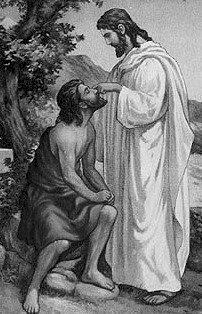
Jesus opens our eyes - OCTOBER 29, 2006

Helen Keller often spoke about tragic “blindness” experienced by many “seeing” people. She wrote, “I have walked into people whose eyes are full of sight but who see nothing in sea or sky, nothing in city streets, nothing in books. It would be far better to sail forever in the night of blindness with sense and feeling and mind than to be content with the mere act of seeing.” This Sunday’s Gospel tells the story of Bartimaeus who comes to sight through the intervention of Jesus. It was Jesus who opens our eyes to the goodness of God that exists in our midst. This Friday we gather for our parish auction. I have seen the spirit of Jesus alive in our parish family. So many people have come forward to offer their time, talent and treasure. May we all see our parish come alive as we gather Friday evening.

Fr. Bob Hawkins, OCTOBER 29, 2006

NEASC visit to St. Luke’s School - OCTOBER 1, 2006

This week we welcome the New England Association of Schools and Colleges (NEASC) team to St. Luke’s School. This group will give us a detailed evaluation of our school. A self study has been prepared by our faculty complete with goals for the future of the school. The team will conduct interviews with faculty and parents. Class room observations will occur. It is important that an objective look at the school be undertaken. This will reveal to us our strengths as a school community and what improvements need to be made. Please pray for the success of this visit this week.

Fr. Bob Hawkins, OCTOBER 1, 2006

Reason and dialogue in a world filled with terrorism - SEPTEMBER 24, 2006

I have been following the current controversy between Pope Benedict and certain voices in the Islamic world. I believe Benedict’s intent was to open a dialogue with the Islamic religion. He has cautioned against religious violence and has urged a union of faith with reason. He is attempting to bring reason and dialogue into a world filled with terrorism. At a meeting with Muslims in Germany last summer Benedict urged joint efforts to “turn back the wave of cruel fanaticism that endangers the lives of so many people and hinder progress toward world peace.”
One particular concern of the Pope is reciprocity. He urges Islamic states to grant the same rights and freedoms to Christians and other religious minorities that Muslims receive in the West. One example of this is that while Saudis contributed tens of millions of dollars to build Europe’s largest mosques in Rome, Christians cannot build churches in Saudi Arabia.
I find it deeply disturbing that the extremists are winning the day in our world. Where are the modern voices of moderation? Who is today’s Anwar Sadat or Yitzhak Rabin? The value of Benedict is that he is appealing for dialogue between faiths. In an atmosphere of interreligious dialogue people meet in confidence and trust, share their spiritual gifts, maintain their faith and practice, and open themselves to grace and truth. This is what Pope Benedict is trying to do. Let us pray that he is successful.

Fr. Bob Hawkins, September 24, 2006

This and that from here and there - SEPTEMBER 17, 2006

This pondering is similar in style to what Bill Reynolds does in the Saturday sport’s section.

- A big thank you to Nancy Fitzgerald and her PTO board for a wonderful opening of the year picnic at Colt State Park. The weather cooperated as we enjoyed a perfect sunset over the bay. We were able to welcome many new families to our school community.

- Last week we had a parish finance meeting. One bit of great news is that our parish debt is down to $63,450.00. As things look now we should be finished with the debt in February. At that point the committee is thinking of changing the debt reduction envelope to a capital maintenance envelope. This will allow us to keep up with improvements and repairs to the parish plant.

- The parish auction will be here before you know it. Mark your calendars for November 3 at Johnson and Wales in Seekonk. We are blessed to have an excellent committee organizing this event.

- Please pray for our religious education teachers as they are commissioned this weekend at all the masses. Also please pray for the success of the Alpha program that begins this Sunday evening.

- Lastly, my office window looks out at the rectory’s backyard. This time of the year I watch the comings and goings of our pre-school parents and their lovely children. It is a great blessing to be in a parish with a school. Forming young people’s hearts, minds and souls brings me great joy. Let us work together this year to build up the St. Luke’s community.

Fr. Bob Hawkins, September 17, 2006

Catholic Framework for Economic Life - SEPTEMBER 10, 2006

Recently the Community Services office of the Diocese sent the priests these reflections on Labor Day. What follows is a brief description of the social teaching of the Church.

“LABOR DAY…a good time to reflect upon the Catholic Framework for Economic Life a statement of the U.S. Catholic Bishops…

1. The economy exists for the person, not the person for the economy.
2. All economic life should be shaped by moral principles. Economic choices and institutions must be judged by how they protect or undermine the life and dignity of the human person, support the family, and serve the common good.
3. A fundamental moral measure of any economy is how the poor and vulnerable are faring.
4. All people have a right to life and to secure the basic necessities of life (e.g., good clothing, shelter, education, health care, safe environment, economic security).
5. All people have the right to economic initiative, to productive work, to just wages and benefits, to decent working conditions, as well as to join unions or other associations.
6. All people, to the extent they are able, have a corresponding duty to work, a responsibility to provide for the needs of their families, and an obligation to contribute to the broader society.
7. In economic life, free markets have both clear advantages and limits: government has essential
responsibilities and limitations; voluntary groups have irreplaceable roles, but cannot substitute for the proper working of the market and the just policies of the state.
8. Society has a moral obligation, including governmental action where necessary, to assure opportunity, meet basic human needs, and pursue justice in economic life.
9. Workers, owners, stockholders, and consumers are moral agents in economic life. By our choices, initiative, creativity and investment, we enhance or diminish economic opportunity, community life, and social justice.
10. The global economy has moral dimensions and human consequences. Decisions on investment, trade, aid, and development should protect human life and promote human rights, especially for those most in need wherever they might live on this globe.

According to Pope John Paul II, the Catholic tradition calls for “a society of work, enterprise and participation” which “is not directed against the market but demands that the market be appropriately controlled by the forces of society and by the state to assure that the basic needs of the whole society are satisfied.” (Centesimus Annus) All of economic life should recognize the fact that we are all God’s children and members of the human family, called to exercise a clear priority for the ‘least among us’.”

Fr. Bob Hawkins, SEPTEMBER 10, 2006

End of summer reflections - SEPTEMBER 3, 2006

A big thank you to Terri Leary and her committee who organized last Sunday’s picnic at the Columban Fathers. A sizeable gathering of parishioners enjoyed food, friendship and games. What a diverse group we are as a parish. We have a great mix of senior citizens, middle age and young families. So many people come together to offer their time and talents to build community.

In the days ahead so many activities will commence. We have a very active fall season with classes and committees beginning. In November our bi-annual parish auction takes place. In October the accreditation team comes to evaluate our school. As I begin my second year as pastor I’m looking forward to working with Father Matt and all of you to make St. Luke’s all that it can be.

Fr. Bob Hawkins SEPTEMBER 3, 2006

Farewell to seminarian Luke Willenberg - AUGUST 13, 2006

This weekend we give a fond good-bye to Luke, our summer seminarian. It has been a real joy having him in our midst. Luke is a very prayerful, friendly and hard-working young man. He has been very present at our masses here in the parish. During our religious education summer season he gave daily reflections at the beginning of each day. He even played baseball and soccer with the kids during the breaks. Luke always felt welcomed by the St. Luke’s family. He enjoyed visiting the homes in the parish. When we had nursing home masses he came along and brought joy to the elderly residents of Orchard View and Bay Spring. I enjoyed introducing him to my communion calls.
The Diocese is wise to have seminarians spend time during their formation years in parishes. There you see the ebb and flow of parish life. This has not only been a good experience for Luke, it has also been very beneficial to us. Thank you, Luke, for your smile, sincerity, prayerfulness and dedication to the people of God. Good luck as you resume your academic formation. We look forward to having you with us at Christmas time.

Fr. Bob Hawkins, AUGUST 13, 2006

Humor: Toot ‘n Tell or go to ... - AUGUST 6, 2006

Here is some summer time humor. Imagine Fr. Bob and Fr. Matt having this conversation one day in the rectory.

The Pastor, speaking to the younger priest, said, “It was a good idea to replace the first
four rows of pews with plush bucket theater seats. It worked like a charm. The front
of the church always fills first now.

The young priest nodded, and the old priest continued, “And you told me a little more
beat to the music would bring young people back to the church, so I supported you
When you brought in that rock’n roll gospel choir. We are packed to the balcony!”

“Thank you, Father,” answered the young priest. “I am pleased that you are open to the new ideas of youth.”

“However,” said the elderly priest, “I’m afraid you’ve gone too far with the drive-thru confessional.”

“But, Father,” protested the young priest, “my confessions and the donations have nearly doubled since I began that!”

“I know, son, but that flashing neon sign, ‘Toot ‘n Tell or Go to Hell’” just can’t stay on the church roof.”

Bob Hawkins, AUGUST 6, 2006

Idleness disintegrated what generations of service could not destroy - July 30, 2006

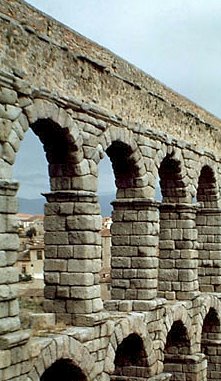
There was a Roman aqueduct in Segovia which was built in 109 A.D. This aqueduct brought water from the mountains to a thirsty city for 1800 years. One day it was decided to give the old aqueduct a well-deserved rest. The city constructed a modern pipeline to carry water to the people. Soon the aqueduct began to fall apart. The sun cracked the mortar and made it crumble. What generations of service could not destroy, idleness soon disintegrated. Our Christian lives are like that. If they fall into disuse and are left idle, they soon fall apart. For the next four weeks we reflect together on the Eucharist, the Bread of Life. If we receive this gift on a regular basis our faith gets the fuel it needs to move forward. So often we can take a blasé attitude toward our faith. Children can receive First Eucharist in May and not receive again until Christmas. Months can go by without regular attendance at Mass. May our faith never go idle. Jesus, may we always hunger for you, our Bread of Life.

Fr. Bob Hawkins, July 30, 2006

Rapid Growth of Islam, Uniqueness of Christianity (Part 3 of 3) - JULY 16, 2006

“Rapid Growth of Islam, Uniqueness of Christianity”
The last of three excerpts from Bishop Braxton’s remarks.

“…The name Islam is derived from an Arabic word which means peace (shalom in Hebrew). Islam means abandoning oneself, surrendering oneself in peace to Allah. While there are passages in the Quran that can be used to incite violence, there is nothing intrinsically violent about Islam. The vast majority of the world’s Muslims live in peace with others. The primary meaning of the Islamic term jihad is not “holy war against infidels” as we sometimes hear. Jihad means to “exert oneself” or to struggle, for example, by working hard, fighting to do good, striving to spread Islam all over the world.
This can also include using political structures and military strength to spread
Islam. Jihad can be a call to war to defend Islam. Islam also teaches that suicide (e.g. terrorists in the four planes on Sept. 11) is a sin, punishable by damnation. Like Christians, Muslims become martyrs only when they are put to death for their
faith.
A number of Christian experts on Christian-Muslim relations believe that while we should reject stereotypes of Islam, we should not take lightly the “clash of
civilizations” that can exist between Islam and Christianity. They see major differences between Islamic countries and countries shaped by Western Europe. They have radically different forms of structuring society and the relationship of religion to the state, and this could lead to serious tension and conflict in the United
States.

The rapid growth and spread of Islam in our world and in our country presents
complex challenges to anyone involved in Catholic education today charting the future for tomorrow. As Catholics we have an unshakable faith in Jesus Christ, the Son of God and Savior of the world. We also believe firmly that Christ has mandated us to proclaim the good news, teach all nations and share with them the gift of baptism. As we have been reminded by the Vatican declaration “Dominus Jesus: On the Unicity and Salvific Universality of Jesus Christ and the Church,” our genuine openness to interfaith dialogue cannot lead us to embrace relativism.

Jesus, the Messiah and Lord, can never be presented as simply one of many prophets, one of many paths to salvation. Truly irenic interfaith dialogue must begin by being honest about the unchangeable foundations of our own faith. Most followers of Islam appreciate this because they feel obliged to be faithful to their fundamental
beliefs.

In our new world situation the new apologetic must acknowledge that it will not be sufficient to refer to Islam in a few paragraphs in a rapid survey of world religions. We are already seeing a small number of Catholic youths converting to Islam. We need serious and substantial Catholic reflections about Christianity and Islam online.
A key component of the new apologetic vis-à-vis Islam, I believe, is personal
contact. A first step in charting the course for the future in these challenging waters is to make every effort to establish contact with followers of Islam who live in or near your communities. Share your stories of faith. In this way, both groups – Christians and Muslims – have a human face.”

Rapid Growth of Islam, Uniqueness of Christianity (Part 2 of 3) - July 9, 2006

By Bishop Edward K. Braxton, the Bishop of Belleville, Illinois.

Islam, as taught by Muhammad in the Qur'an, a work Muslims believe is the inspired literal word of God, is built upon five duties called the Five Pillars.


• The Creed (Shahada): “There is no god but Allah and Muhammed is his messenger.”

• Prayer (Salat): Faithful Muslims pray a standardized set of prayers five times a day.

• Alms-Giving (Zakat): Once a year based upon their income Muslims must give alms for the poor.

• Fasting (Swam): Throughout the daylight hours of the lunar month of Ramadan, observant Muslims must fast.

• Pilgrimage (Haj): If they can, all Muslims must go on pilgrimage once in their lifetime to Mecca .


Since Muhammad was both a political and a spiritual leader, the “Islamic Way” or “Shariah,” derived from the Qur'an and other Islamic texts, has led to the Shariah Law which governs the way modern Islam interacts with the non-Islamic world. Like Christianity, Islam has a vision of how people should live in this world, and it strives to create social and political structures in which people live according to this vision, sometimes down to the last detail.


Most (95%) of all Muslims are Sunni Muslims who believe that their leaders should be chosen by consultation and consensus. A small (3%) group called Shiite Muslims believe that only direct descendants of Muhammad can be Muslim leaders. Both groups embrace the Five Pillars. But they differ significantly on how Muslims should live in religiously and politically pluralistic societies.


The Islamic community is growing rapidly in Europe . There are several million Muslims in the United States , substantial numbers in many metropolitan areas. And their numbers continue to grow. In time Islam may well be a major force in this country. I enjoyed and continue to enjoy an excellent relationship with Ahmed El-Mamlouk , the Imam of the growing Muslim community in Lake Charles . He is a gracious man steeped in Islamic wisdom from the School of Alexandria in Egypt . Well over two million American Muslims worship at mosques each week. There have been disputes in some cities about the call to prayer broadcast from the minarets of mosques ‘imposing” Islam on Christians and counter arguments that church bells “impose” Christianity on Muslims.

Since Islam has no worldwide central authority, fragmentation and sectarianism are not uncommon. This may be especially the case regarding the issue of how faithful Muslims should live in pluralistic, democratic societies like the United States , which sanctions no state religion and which welcomes diverse religious traditions. Some Muslims prefer an Islamic state, like Iran or Saudi Arabia , where religious leaders who apply the Qur'an to everyday life making no distinction between secular and religious life hold the highest political positions. This is a part of the current difficulty in forming a new government in Iraq .


One very austere Islamic sect called Wahhabism (started by Muhammed bin Abd al-Wahhab (1703-87), the co-founder of Saudi Arabia ) calls for the strictest interpretation of the Qur'an. Its followers reject what they see as the materialistic, self-indulgent secularism of western (especially American) culture. It is the Wahhabi sect from Saudi Arabia that has shaped the violent extremism of Osama bin Laden. to be continued...